Your A y shaped protein that sticks to specific antigens images are available. A y shaped protein that sticks to specific antigens are a topic that is being searched for and liked by netizens today. You can Download the A y shaped protein that sticks to specific antigens files here. Find and Download all royalty-free images.
If you’re looking for a y shaped protein that sticks to specific antigens images information linked to the a y shaped protein that sticks to specific antigens topic, you have come to the ideal site. Our site frequently provides you with suggestions for seeing the maximum quality video and image content, please kindly hunt and find more enlightening video content and graphics that match your interests.
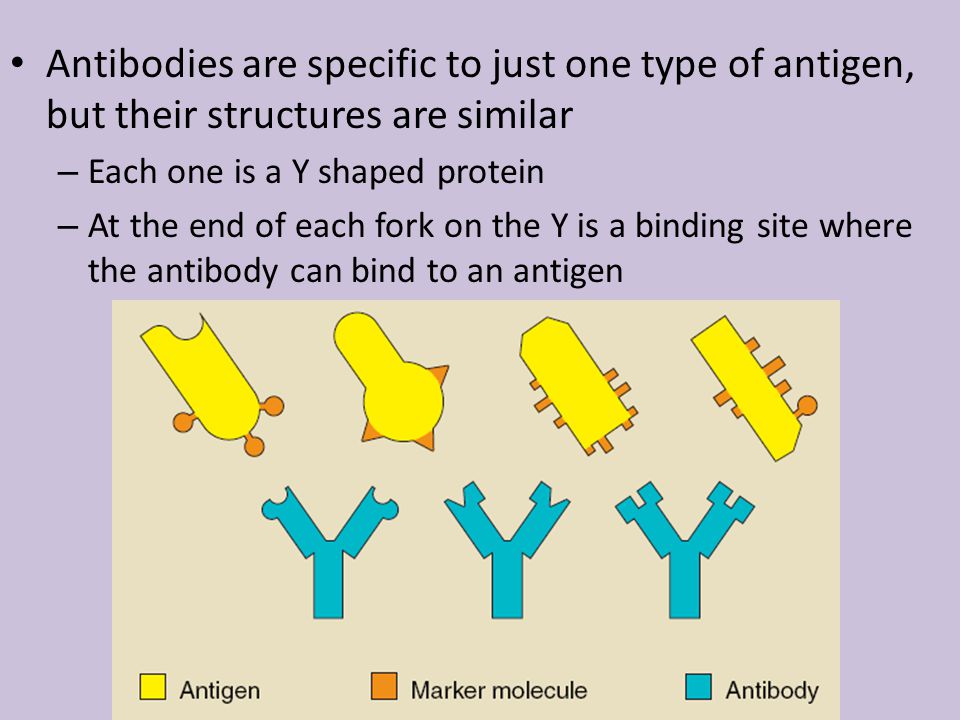
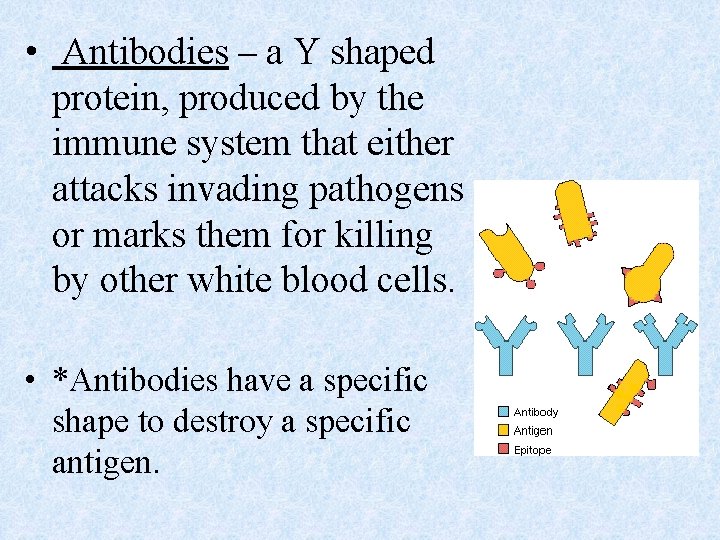
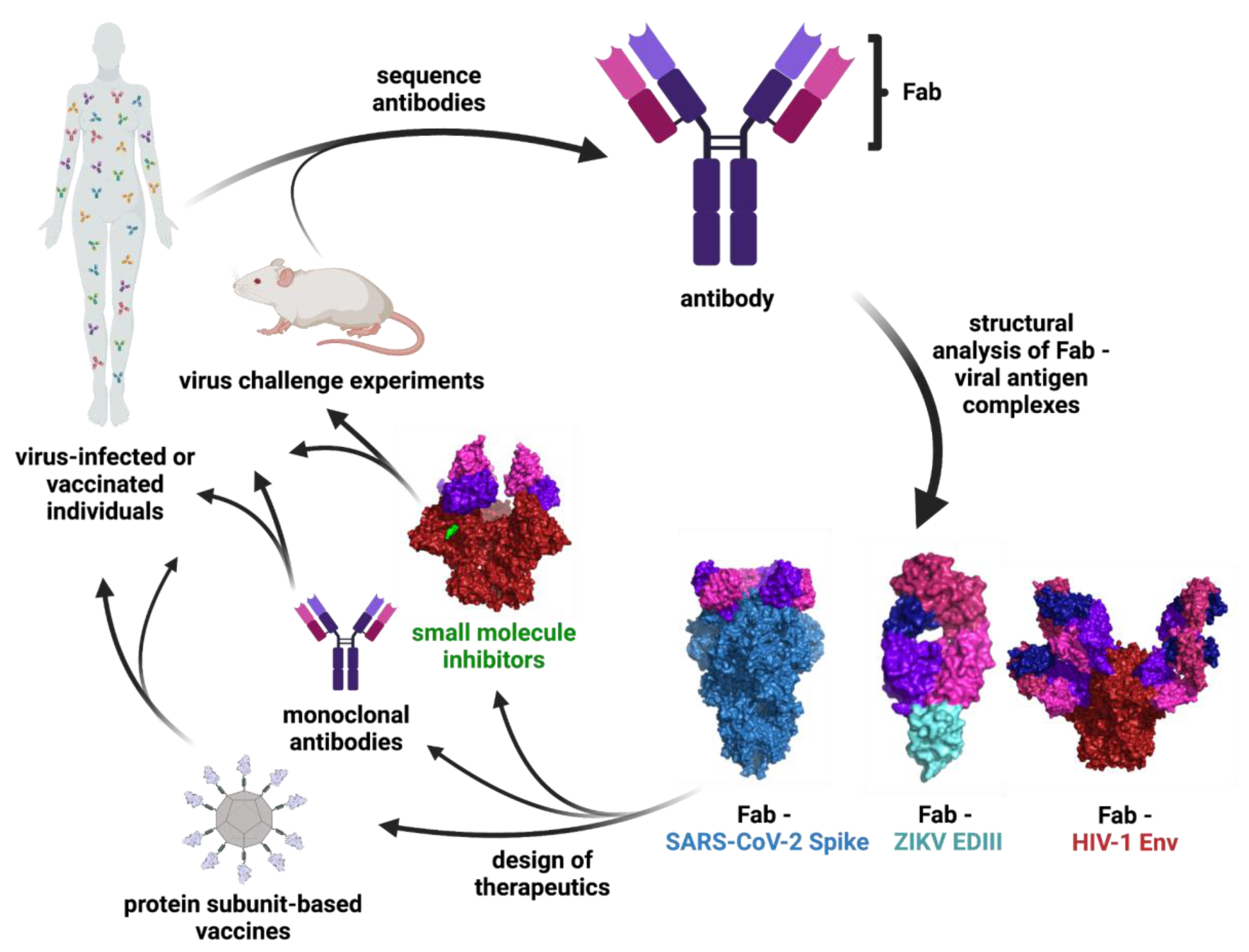
A Y Shaped Protein That Sticks To Specific Antigens. Their capability to recognize antigens with high specificity makes them excellent therapeutic targets. The binding mechanism between the antibody and the epitope is extremely precise. B cells - produce antibodies Ab Y-shaped protein molecules which bind to specific targets antigens tag them for destruction by phagocytes or the complement system. Epitopes are mostly located on the hydrophilic part of the antigen and their size is 10-15 amino acid residues that can be contiguous on the protein chain linear epitope or discontinuous yet spatially close on the protein chain.
 6 3 Defense Against Infectious Disease 6 3 Assessment Statements Define Pathogen Explain Why Antibiotics Are Effective Against Bacteria But Not Against Ppt Download From slideplayer.com
If the antibodies bind to the virus proteins or antigens a colored line appears on the test strip. Quicker and stronger response to previously encountered pathogens. The antibody receptor also called an immunoglobulin Ig was the first antigen-specific receptor to be characterized and is commonly drawn as a Y-shaped cartoon. Each tip of the Y of an antibody contains a paratope analogous to a lock that is specific for one. The binding mechanism between the antibody and the epitope is extremely precise. An antigen is a molecule that stimulates an immune response by activating leukocytes white blood cells that fight disease.
The two binding domains coded for.
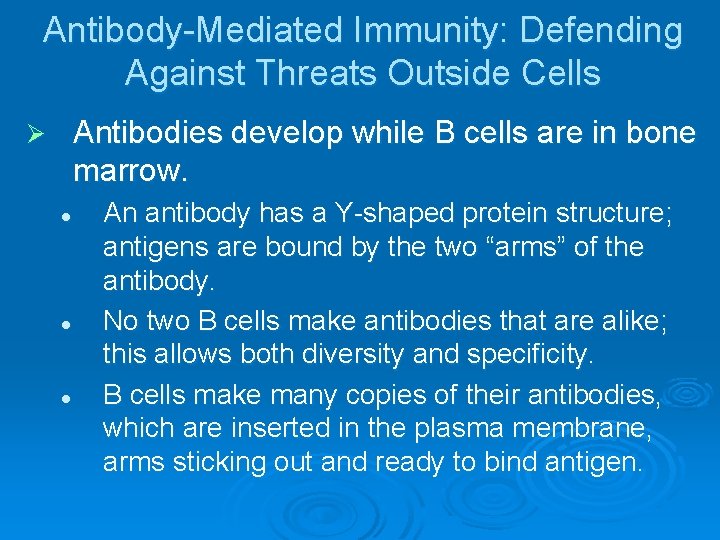
Antibodies are a large Y-shaped protein produced by B cells that initiate an immune response against a specific antigen. An antigen is a molecule that stimulates an immune response by activating leukocytes white blood cells that fight disease. The immune response a. Antibodies also called immunoglobulins or Igs are Y-shaped proteins that circulate through the blood stream and bind to specific antigens thereby attacking microbes. The bottom of the Y or the stalk binds to several other immune-system compounds that can help. Understanding the structural basis of antibody-antigen interactions is therefore crucial for improving our ability to design efficient biological drugs.
 Source: slidetodoc.com
Antibodies also called immunoglobulins or Igs are Y-shaped proteins that circulate through the blood stream and bind to specific antigens thereby attacking microbes. The antibody receptor also called an immunoglobulin Ig was the first antigen-specific receptor to be characterized and is commonly drawn as a Y-shaped cartoon. The binding mechanism between the antibody and the epitope is extremely precise. Functional system that seeks to destroy or inactivate specific antigens foreign molecules and cells b. The bottom of the Y or the stalk binds to several other immune-system compounds that can help.
 Source: slidetodoc.com
Understanding the structural basis of antibody-antigen interactions is therefore crucial for improving our ability to design efficient biological drugs. The two arms at the top of the Y bind to the intruder molecule. An antigen is a molecule that stimulates an immune response by activating leukocytes white blood cells that fight disease. Such an Ig comprises three globular domains connected by more flexible linkers. These are big in size Y-shaped blood proteins produced by plasma cells.
 Source: sciencedirect.com
The immune response a. Antibodies are a large Y-shaped protein produced by B cells that initiate an immune response against a specific antigen. Specific Defense Mechanisms 1. The antibody receptor also called an immunoglobulin Ig was the first antigen-specific receptor to be characterized and is commonly drawn as a Y-shaped cartoon. Antigens may be present on invaders such as bacteria viruses parasites fungi and transplanted organs or.
 Source: slideplayer.com
Cytotoxic T cells - involved in the cell-mediated response. Directly destroy body cells already infected by certain viruses or parasitic fungi. Antigens may be present on invaders such as bacteria viruses parasites fungi and transplanted organs or. The two arms at the top of the Y bind to the intruder molecule. The immune response a.
 Source: storyboardthat.com
They are Y-shaped proteins made by your immune systems B lymphocytes or B cells. Functional system that seeks to destroy or inactivate specific antigens foreign molecules and cells b. Its by exploring this binding mechanism that it became possible to tag specific targets and study. This protein type has specific regions that bind to antigens. An antigen is a protein that can come from some foreign source and when bound to an antibody induces a cascade of events through the bodys immune system.
 Source: slideplayer.com
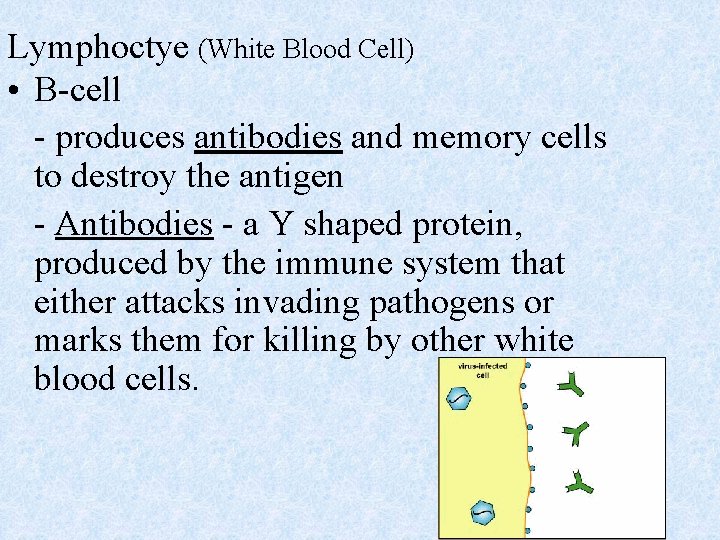
Its by exploring this binding mechanism that it became possible to tag specific targets and study. The first round of antibodies arent particularly well matched to the shape of a new invading protein but. Quicker and stronger response to previously encountered pathogens. An antibody Ab also known as an immunoglobulin Ig is a large Y-shaped protein used by the immune system to identify and neutralize foreign objects such as pathogenic bacteria and virusesThe antibody recognizes a unique molecule of the pathogen called an antigen. The binding mechanism between the antibody and the epitope is extremely precise.
 Source: slidetodoc.com
These are big in size Y-shaped blood proteins produced by plasma cells. Responds to particular foreign substances c. The immune response a. Antigens may be present on invaders such as bacteria viruses parasites fungi and transplanted organs or. An antibody is a Y-shaped large protein 160 kDa bearing two combining sites paratopes that bind to a limited surface epitope of the antigen specifically.
 Source: slideplayer.com
Their capability to recognize antigens with high specificity makes them excellent therapeutic targets. Antigens are foreign pathogens that invade the body and have the potential to offer rise to a response from our immunity system either by grouping up with a bigger molecule or alone after binding with. Prostate-specific antigen or PSA is a protein produced by normal as well as malignant cells of the prostate gland. Cytotoxic T cells - involved in the cell-mediated response. For this test a blood sample is sent to a laboratory for analysis.
 Source: courses.lumenlearning.com
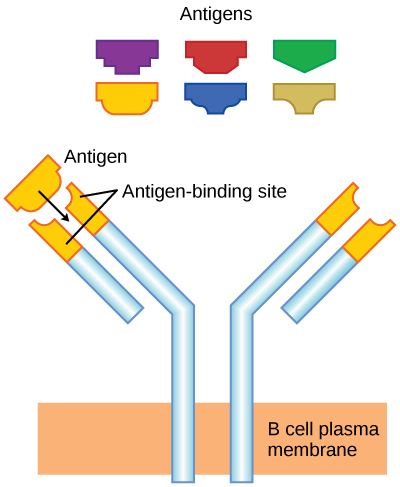
Each antibody contains a paratope which recognizes a specific epitope on an antigen acting like a lock and key binding mechanism. The antibody recognizes a unique molecule of the antigen the epitope. The blood level of PSA is often elevated in men with prostate. Inorganic platforms raise concerns of toxicity and non-biodegradability. Each tip of the Y of an antibody contains a paratope analogous to a lock that is specific for one.
 Source: slidetodoc.com
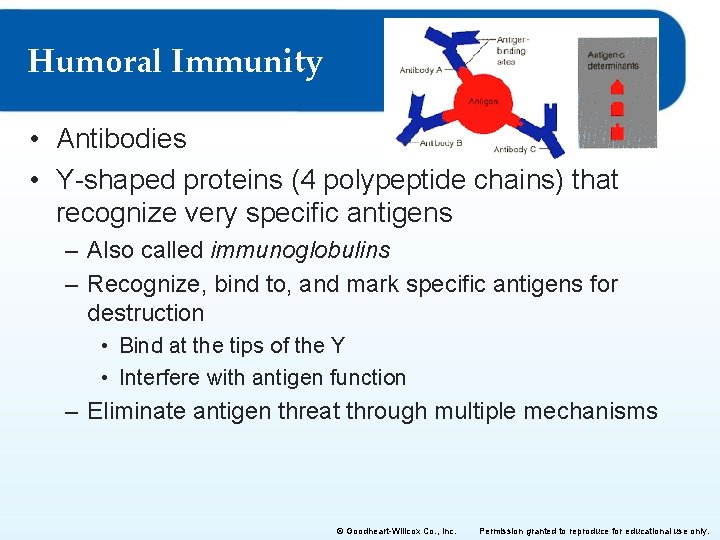
Antigens are foreign pathogens that invade the body and have the potential to offer rise to a response from our immunity system either by grouping up with a bigger molecule or alone after binding with. It is formed by the combination of two identical heavy and two identical light chains. Cytotoxic T cells - involved in the cell-mediated response. Antibody Ab is also known as an immunoglobulinIg. Such an Ig comprises three globular domains connected by more flexible linkers.
 Source: khanacademy.org
An antigen is a protein that can come from some foreign source and when bound to an antibody induces a cascade of events through the bodys immune system. The bottom of the Y or the stalk binds to several other immune-system compounds that can help. The classical representation of an antibody is a Y-shaped molecule composed of four polypeptides-two heavy chains and two light chains. Antibodies are a large Y-shaped protein produced by B cells that initiate an immune response against a specific antigen. The results are usually reported as nanograms of PSA per milliliter ngmL of blood.
 Source: courses.lumenlearning.com
Antibodies also called immunoglobulins or Igs are Y-shaped proteins that circulate through the blood stream and bind to specific antigens thereby attacking microbes. Functional system that seeks to destroy or inactivate specific antigens foreign molecules and cells b. The immune response a. An antibody Ab also known as an immunoglobulin Ig is a large Y-shaped protein used by the immune system to identify and neutralize foreign objects such as pathogenic bacteria and virusesThe antibody recognizes a unique molecule of the pathogen called an antigen. Its by exploring this binding mechanism that it became possible to tag specific targets and study.
 Source: mdpi.com
An antigen is a protein that can come from some foreign source and when bound to an antibody induces a cascade of events through the bodys immune system. Prostate-specific antigen or PSA is a protein produced by normal as well as malignant cells of the prostate gland. The antibodies are transported through the blood and the lymph to the pathogen invasion site. Antibody Ab is also known as an immunoglobulinIg. Epitopes are mostly located on the hydrophilic part of the antigen and their size is 10-15 amino acid residues that can be contiguous on the protein chain linear epitope or discontinuous yet spatially close on the protein chain.
 Source: researchgate.net
The binding mechanism between the antibody and the epitope is extremely precise. Functional system that seeks to destroy or inactivate specific antigens foreign molecules and cells b. A y shaped protein that sticks to specific antigens antibodies a spherical bacterium cocci a cell that engulfs and digests foreign cells and debris phagocytes a rod shaped bacterium bacillius a disease causing agent pathogen or antigen examples include mrsa streptococcus and H1N1 pathogen capable of reproducing only inside other living cells. Their capability to recognize antigens with high specificity makes them excellent therapeutic targets. The two arms at the top of the Y bind to the intruder molecule.
 Source: mdpi.com
Functional system that seeks to destroy or inactivate specific antigens foreign molecules and cells b. Its by exploring this binding mechanism that it became possible to tag specific targets and study. The antibodies are transported through the blood and the lymph to the pathogen invasion site. Directly destroy body cells already infected by certain viruses or parasitic fungi. For this test a blood sample is sent to a laboratory for analysis.
 Source: slideplayer.com
They are Y-shaped proteins made by your immune systems B lymphocytes or B cells. Antibodies are Y-shaped proteins that recognize and bind to foreign substances such as antigens. Its by exploring this binding mechanism that it became possible to tag specific targets and study. Antibodies are Y-shaped proteins that use their arms as grabbers for foreign proteins. These are big in size Y-shaped blood proteins produced by plasma cells.
 Source: onlinelibrary.wiley.com
Cytotoxic T cells - involved in the cell-mediated response. For this test a blood sample is sent to a laboratory for analysis. The binding mechanism between the antibody and the epitope is extremely precise. Each tip of the Y contains a paratope a structure analogous to a lock that is specific for one particular epitope similarly analogous to a key on an antigen allowing these two structures to bind together with precision. Antibodies are Y-shaped proteins that recognize and bind to foreign substances such as antigens.
Source: slideplayer.com
Antibodies also called immunoglobulins or Igs are Y-shaped proteins that circulate through the blood stream and bind to specific antigens thereby attacking microbes. Prostate-specific antigen or PSA is a protein produced by normal as well as malignant cells of the prostate gland. Antibodies are a large Y-shaped protein produced by B cells that initiate an immune response against a specific antigen. The two binding domains coded for. Antigens are foreign pathogens that invade the body and have the potential to offer rise to a response from our immunity system either by grouping up with a bigger molecule or alone after binding with.
This site is an open community for users to do submittion their favorite wallpapers on the internet, all images or pictures in this website are for personal wallpaper use only, it is stricly prohibited to use this wallpaper for commercial purposes, if you are the author and find this image is shared without your permission, please kindly raise a DMCA report to Us.
If you find this site adventageous, please support us by sharing this posts to your favorite social media accounts like Facebook, Instagram and so on or you can also bookmark this blog page with the title a y shaped protein that sticks to specific antigens by using Ctrl + D for devices a laptop with a Windows operating system or Command + D for laptops with an Apple operating system. If you use a smartphone, you can also use the drawer menu of the browser you are using. Whether it’s a Windows, Mac, iOS or Android operating system, you will still be able to bookmark this website.


